
Rubik's Cube as Mathematical Learning
A classroom project centered on pattern recognition, planning, algorithmic thinking, spatial reasoning, persistence, and comparing strategies.
Read the case →A professional trajectory that connects classroom practice, teacher leadership, academic research, documented school projects, educational publishing, web learning, and Android products.
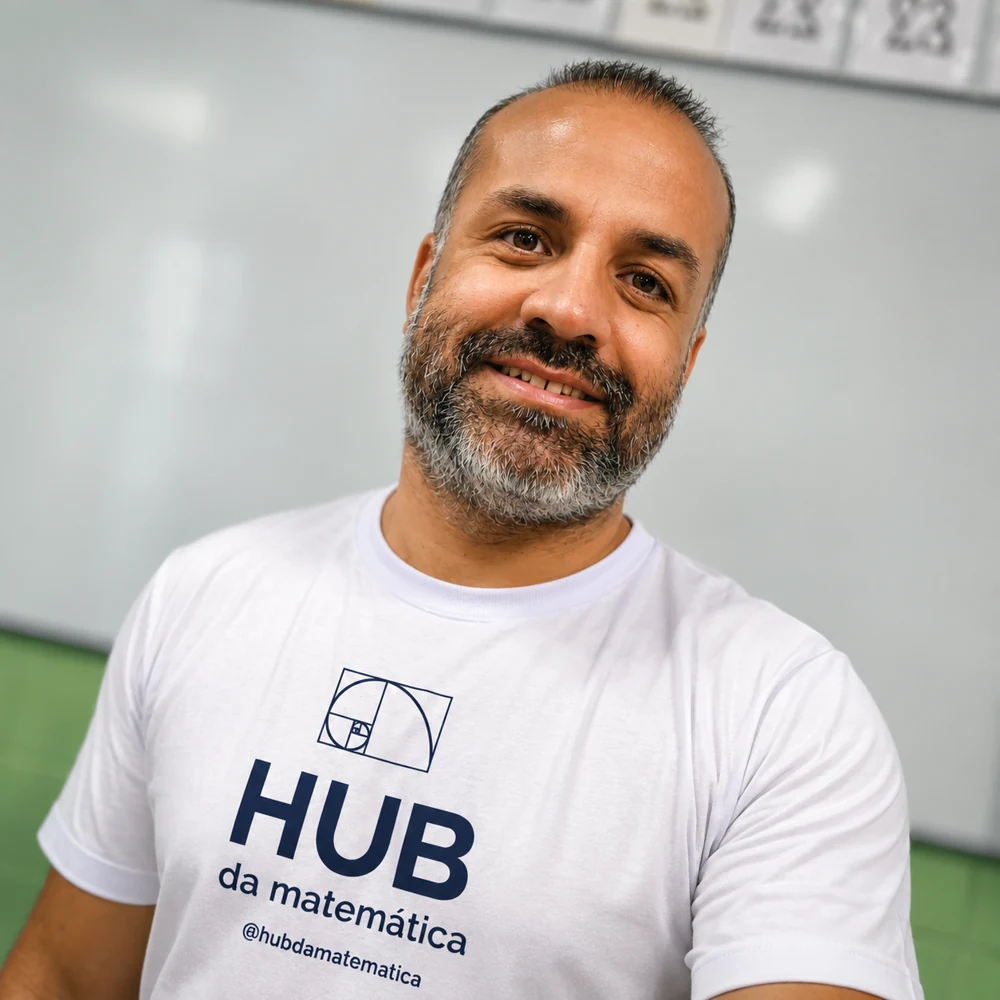
Professional profile
Hélio Junior is a Brazilian mathematics educator with higher-education qualifications in Mathematics Education and Pedagogy, and a Professional Master's degree in Mathematics from the University of São Paulo (ICMC/USP).
Teaching since 1997, his trajectory includes classroom teaching, mathematics coordination, teacher guidance, school-wide projects, academic research, educational publishing, and the design of digital learning experiences.
He founded HUB da Matemática, where classroom experience became visual mathematics, pathways, games, stories, challenges, exam preparation, assessment resources, mobile learning, and tools for students and teachers.
Selected work
Rather than presenting a long list of tools, this selection shows how the work moves across classroom projects, school documentation, academic research, and educational technology.
A classroom project centered on pattern recognition, planning, algorithmic thinking, spatial reasoning, persistence, and comparing strategies.
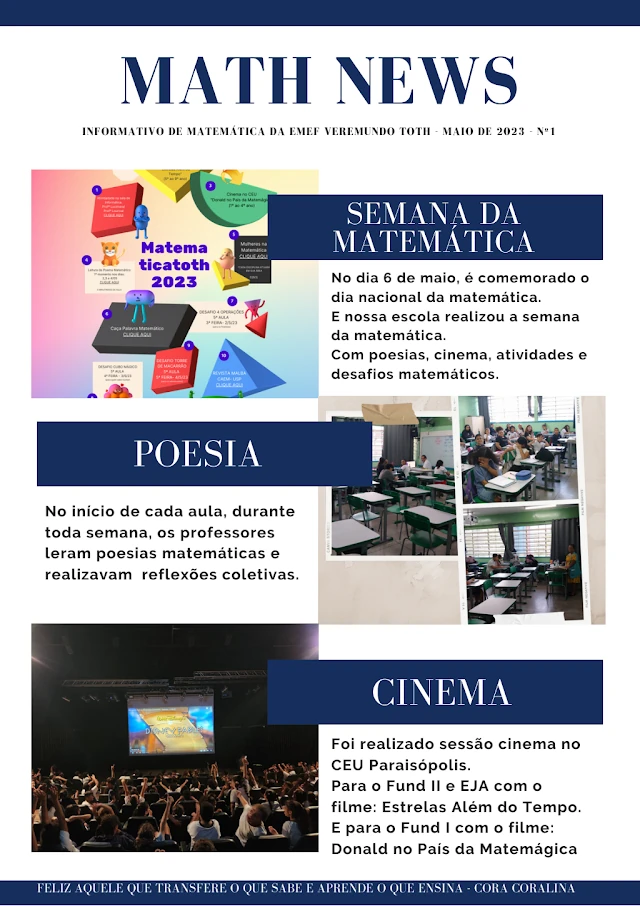
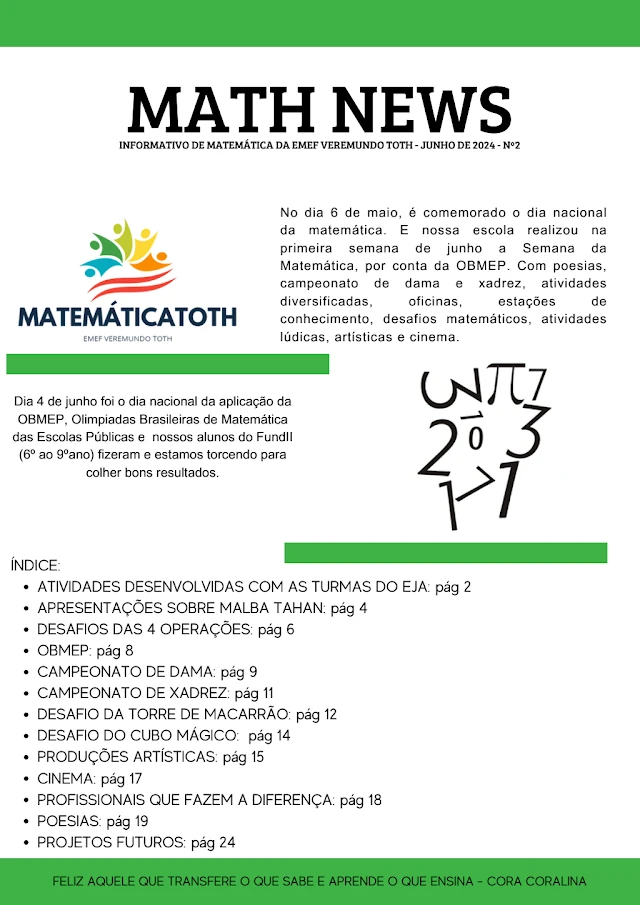
Read the case →Mathematics Week, Tangram, operations challenges, construction tasks, games, film, art, entrepreneurship, and activities across the school community.
See the evidence →Olimpíadas do Conhecimento: logic and reasoning challenges created as a social-engagement initiative and designed to connect learners through virtual competitions.
Explore the project →Two school newsletters translated into English, preserving documentary evidence of projects, student participation, activities, and educational context.
Open the publications →ENEM, ETEC, and HUBMAT learning products show the move from instructional design to web and Android learning experiences.
See the apps →Professional Master's research investigating student learning, ENEM competencies, and flipped-classroom practices in Brazilian basic education.
Read about the research →Case study · Rubik's Cube
The project began in 2011 during Hélio's school trajectory at Colégio Adventista UNASP-SP and continued in other educational settings. At EMEF Veremundo Toth, MATH NEWS records the project as an ongoing activity developed with students from 2019 onward.
The goal is not merely to solve the cube. Students observe patterns, anticipate consequences, organize sequences, revise failed attempts, compare strategies, and persist through a complex problem.
Inside a Mathematics Week
The MATH NEWS documents show a deliberately varied experience: mathematics appears through problems, physical construction, games, cultural references, communication, art, film, teamwork, and student production.

Reasoning, participation, and challenge
The international portfolio distinguishes the projects instead of merging them: the Knowledge Olympics is a virtual engagement initiative, while MatematicaToth was a school-based project with planned knowledge stations.
Olimpíadas do Conhecimento uses logic and reasoning challenges to stimulate participation and connect learners through virtual competitions.
View the Brazilian initiative ↗The 2024 MATH NEWS records a future-project plan for the Science and Technology Week with 16 knowledge stations designed for students to move through a sequence of mathematical experiences.
See the English record ↗Educational technology & apps
The role represented here includes concept development, educational architecture, content organization, learning-flow design, and product direction. Real product visuals are shown below.

ENEM is Brazil's national high-school examination and an important route into higher education. The HUBMAT project organizes preparation by subject area, practice, review, and study direction.
Portfolio role: concept, instructional design, content architecture, and educational product development.

ETECs are public technical schools in the state of São Paulo. The app uses previous-exam questions, study by area, review, progress tracking, and structured preparation for the entrance process.
Portfolio role: concept, instructional design, product architecture, content organization, and educational direction.

A mathematics learning product built around exploration, practice, challenges, applications, progress, rewards, and student choice. Android and web access are offered as separate products.
Portfolio role: concept, learning architecture, curricular organization, experience design, and educational product direction.
Brazilian education context
Several projects come from Brazil. These terms are explained here so the evidence can be understood without prior knowledge of the Brazilian education system.
Brazil's National High School Examination, widely used in access to higher education.
Public technical schools maintained by the state of São Paulo, with a competitive entrance process.
The Brazilian Mathematics Olympiad for Public Schools, a national mathematics competition.
Youth and Adult Education, a Brazilian educational pathway for learners completing basic education later in life.
Professional timeline
The portfolio is organized chronologically so the digital work remains connected to the professional experience that preceded it.
Classroom teaching, student follow-up, assessment, and the development of learning activities.
Mathematics coordination in the Anglo educational system at Colégio Adventista de Santos, supporting the pedagogical work of the subject area.
A school project begins and later continues in other educational contexts.
Research on learning, ENEM skills and competencies, and flipped-classroom practices in basic education.
Work as a subject-area teacher leader in the municipal school network, supporting planning and mathematics teaching practices.
School projects and student participation documented through two mathematics newsletters.
Educational technology, interactive mathematics, digital products, and an English-language learning portfolio.
Pedagogical method
A recurring design logic connects the classroom projects, research, games, visual tools, pathways, and interactive labs.
Published academic research
In 2019, Hélio Junior defended a Professional Master's dissertation at the University of São Paulo (ICMC/USP) examining learning related to ENEM skills and competencies and the use of the flipped classroom in Brazilian basic education.
English rendering of the title: Analysis of Learning of ENEM Skills and Competencies through the Use of the Flipped Classroom in Basic Education.
The research supports a principle that remains visible in the later portfolio: technology is useful when it creates better conditions for students to investigate, practice, receive feedback, and make sense of ideas.
View the Dissertation at USP ↗The dissertation is hosted by the University of São Paulo in Portuguese.
Evidence & publications
The portfolio links to primary evidence instead of relying only on descriptive claims.
Selected educational products created in Brazil
These Portuguese-language projects show additional directions in the broader HUBMAT body of work.
Schools · universities · educational partnerships
The portfolio is open to professional conversations involving mathematics education, instructional design, digital learning resources, school projects, and educational partnerships.